Is this corset workflow intended for fetish content?
No. It treats the corset as structured adult fashion outerwear, typically layered over opaque clothing, with attention to seams, closures, silhouette, and ordinary editorial presentation.
SPICYFRAME · PRACTICAL GUIDES
Create non-erotic adult corset-outerwear videos with stable seams, clear layering, plausible garment structure and restrained editorial movement.
5 seconds · 480p · $3.99. Pay per video, no subscription required.
Updated

An AI corset fashion video can focus on construction, layering, and silhouette in an ordinary adult editorial context. This guide treats the corset as fashion outerwear, for example layered over an opaque blouse or dress, with no fetish framing or erotic body emphasis. Start by identifying the design feature: vertical seam lines, a shaped front panel, visible closures, or the contrast between a structured piece and a softer layer beneath it. Avoid defining the brief through body reduction or exaggerated proportions. A clear garment-first description gives the model visible construction to preserve and gives the reviewer a practical standard. The aim is a coherent fashion interpretation, not a claim about body shaping, medical support, or how a real corset performs when worn.
Use a sharp adult fashion photograph that shows the front structure and enough of the side to understand how the garment wraps around the torso. Vertical seams or channels should be distinct, closures should have a consistent arrangement, and the top and bottom edges should be visible. Avoid a source where crossed arms, hair, or a bag hides the central construction. For a real model, obtain permission for animation and the planned publication and confirm rights in the photograph. The fashion-video guide helps connect the reference with the campaign brief. If the still contains asymmetrical or impossible construction that is not part of the design, correct it before motion. A video model may otherwise preserve or amplify the ambiguity rather than resolve it.
Select opaque underlying clothing with a clear sleeve, collar, or skirt boundary so the corset reads as one layer in a styled outfit. Keep the color contrast sufficient to distinguish the structured outerwear from the softer garment beneath it. The reference should show the intended coverage directly; a prompt alone should not be relied on to invent or maintain it. Avoid styling directions centered on exposure or intimate anatomy. The glamour editorial guide offers related mood ideas while keeping the subject adult and non-explicit. Record which layer belongs in front at each edge, because generation can merge a blouse into the corset or turn a lower edge into an unexpected opening. This is a construction problem best solved through clear visual evidence.
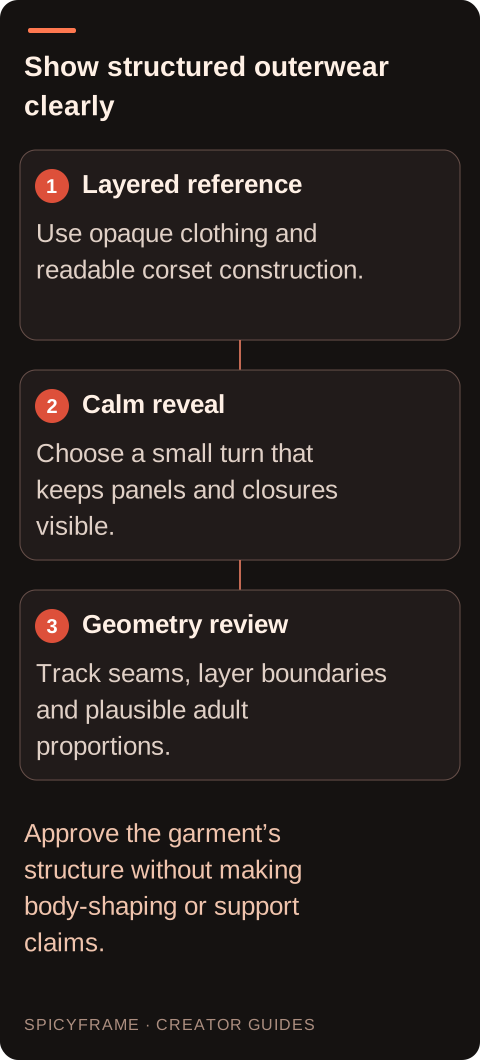
A structured garment can create a defined silhouette, but the adult subject should retain plausible proportions and posture. Do not request extreme waist compression or use the image to promote a body-transformation claim. Review shoulders, ribcage, hips, and the relationship between the garment and the person for obvious distortion. A fashion illustration may intentionally stylize proportions, but that choice should be clear and should not be presented as a realistic product result. Keep the pose composed, with comfortable balance and no exaggerated arching. The garment's appeal can come from craftsmanship, color, and layering. This approach also reduces the chance that a motion request is interpreted as a body-editing task rather than an ordinary presentation of structured clothing on an adult model.
A compatible side or back view can clarify lacing, closures, or panel placement when those details are important to the shot. Use the same corset and underlying outfit, not a collage of different designs that happen to share a color. The multiple-reference guide explains how to give each image a clear role. SpicyFrame supports up to 12 authorized JPG, PNG, or WebP references below 10 MB each, but a small consistent set is easier to review. If the camera will remain near the front, a clear primary view may be enough. Do not add a complicated back reference merely to fill an upload slot. Each extra image should reduce uncertainty about the approved garment rather than introduce a competing silhouette or closure system.
A small quarter-turn can show how the structured panels relate to the softer clothing beneath them. Keep the arms positioned so they do not repeatedly cover the key seams or closures. A gentle camera approach can also work when the subject holds a stable pose. Avoid rapid twisting, bending, or large rotations in the first test, because those actions demand substantial deformation and unseen construction. Describe the desired action in fashion terms: a composed adult model makes a small turn while the layered outfit remains consistent. This is a direction, not a guarantee. The clip should reveal the garment's shape without making the body itself the spectacle. If the design changes during motion, simplify the action before adding more camera effects or longer duration.
Track a few vertical seam lines from beginning to end. They should remain connected to the garment and preserve their relative spacing rather than bending independently or disappearing into the blouse. Check the count and placement of visible closures, the shape of the upper and lower edges, and the continuity of any back lacing that enters view. The artifact guide helps identify where an overlap or motion begins to fail. Also inspect the adult subject's proportions to ensure the generation has not narrowed or expanded the body unexpectedly. Watch at normal speed for flickering geometry, then pause to confirm the problem. Higher output resolution can make the seam error easier to see, but it does not by itself repair the structural inconsistency.
SpicyFrame uses Seedance 2.5 through Segmind to generate vertical 9:16 MP4 clips with ambient audio in 5, 10, or 30 seconds at 480p, 720p, or 1080p. It has no timeline editor, seed field, negative-prompt field, or 4K output. Use an appropriate separate editor for collection sequencing, accurate labels, and licensed music. A five-second High 720p clip costs $4.99, which can support a modest structural test before a larger production commitment. Have the designer or brand approve the panels, closures, layering, and silhouette if the clip represents a real item. Do not claim medical support, body reduction, or verified fit from synthetic motion. Keep the source rights and adult model's permission with the final version, and present the result as the approved fashion asset it actually is.
| Construction area | Source requirement | Motion approval |
|---|---|---|
| Vertical channels | Clear count and relative spacing | Lines stay attached to the garment |
| Closures | Consistent placement and type | No duplication or disappearance |
| Upper and lower edges | Visible shaped boundaries | No invented openings or merged layers |
| Underlying clothing | Opaque blouse or dress clearly separated | Coverage and layer order remain stable |
| Adult proportions | Plausible posture and silhouette | No unintended body compression or distortion |
No. It treats the corset as structured adult fashion outerwear, typically layered over opaque clothing, with attention to seams, closures, silhouette, and ordinary editorial presentation.
Show the seam or channel layout, closures, top and bottom edges, and relationship to the underlying outfit. Clear construction is more useful than a dramatic pose that hides the garment.
No. Keep adult proportions plausible and avoid body-reduction claims. The fashion purpose can be expressed through structure, color, and layering without extreme anatomical distortion.
A small quarter-turn or gentle camera approach can show panel structure while keeping the outfit readable. Rapid twisting and large rotations make unseen construction and deformation harder to control.
Generation can merge layers, move boundaries, or invent openings. The opaque underlayer should remain a distinct, consistent part of the outfit throughout the clip.
No. Synthetic motion does not verify fit, body shaping, or medical support. Use actual product evidence and appropriate review for any claim beyond the visual fashion presentation.