5 seconds · 480p · $3.99. Pay per video, no subscription required.
Updated
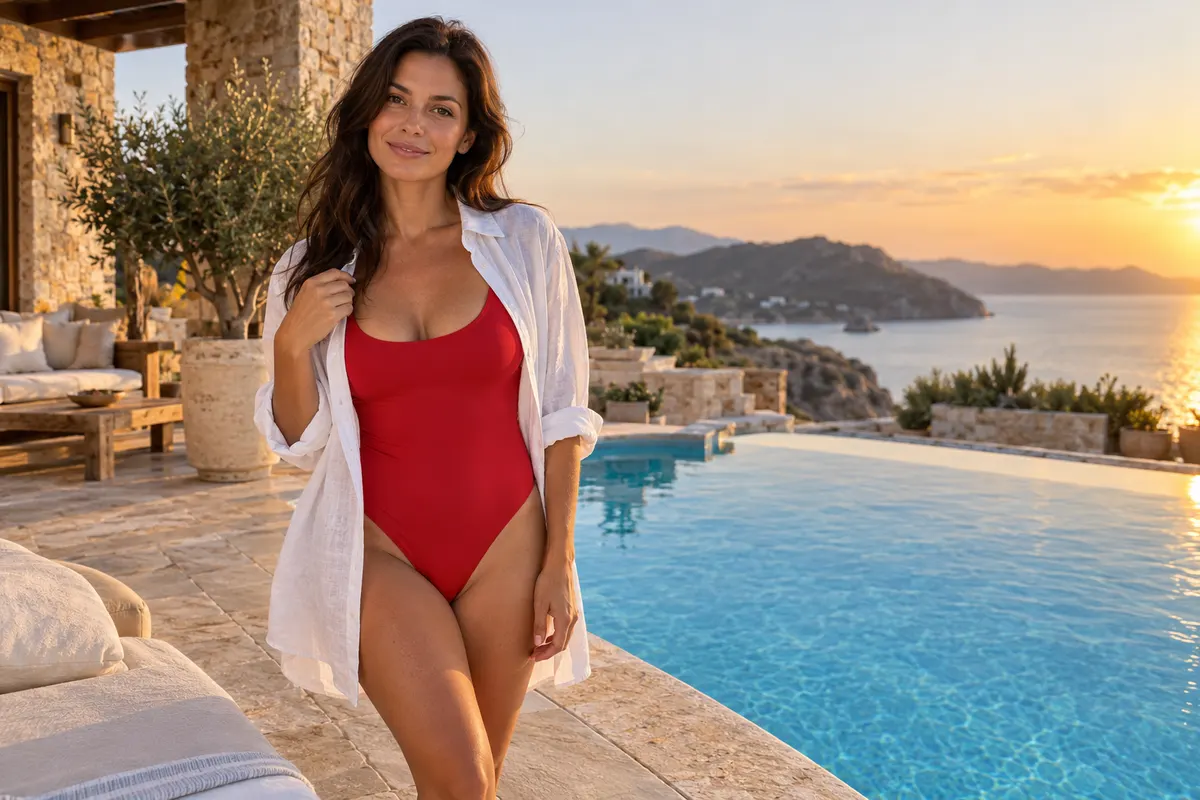
AI-generated editorial illustration: adult swimwear fashion beside a pool at golden hour. This is a scene reference, not a generated-video sample.
Make the beach a coherent fashion environment
Beach glamour photography can inspire an adult swimwear or summer fashion video when the setting supports the styling. Use authorized references of consenting adults and keep the concept nonsexual, with relaxed upright poses and a clear garment focus. Wind, waves and open light already create movement, so the person does not need a complicated action. Decide whether the scene is a quiet shoreline portrait, a slow walk on firm sand or a cover up detail in a breeze. That decision helps control the crop, camera and ambient sound. A beach clip should remain a readable fashion study rather than a collection of unrelated tropical effects. For bikini looks specifically, see the AI bikini generator guide.
Select a reference with a usable horizon and shoreline
A level horizon gives the viewer a strong cue for stability. Check the source for tilted water, heavily distorted wide angle edges or a shoreline that disappears behind the subject. Those features can become more noticeable in motion. Leave enough room around hair, hands and garment edges for the intended breeze. If the adult is wearing swimwear, confirm that the approved coverage and design are clear in the source. A second image of a different outfit may introduce conflict rather than useful detail. The beach styling guide covers broader scene ideas; this guide focuses on making wind, water and the horizon agree within one short shot.
Choose one wind direction for hair and fabric
A light breeze can lift a shirt hem or move hair away from the face, but those effects should broadly agree in direction. Hair sweeping left while a cover up streams right can make the scene feel disconnected. Keep the movement modest enough that the garment retains its shape and coverage. If the source contains tightly styled hair or a fitted outfit, a strong wind brief asks for a larger transformation than the image supports. Do not make dramatic fabric movement the default. Identify the one detail the breeze should reveal, such as a sleeve edge or a scarf, and judge whether it remains recognizable throughout the clip.
Read the horizon: Choose a source with clear sea and shoreline geometry.. Set one breeze: Keep hair and clothing moving in a coherent direction.. Check ground contact: Review feet, sand and waves during any walking action.. Accept a calm fashion scene with stable geography and garment detail.
Keep the sea and camera from competing
A still camera lets small waves provide background motion. A gentle tracking move may suit a slow walk, but a broad orbit can tilt the horizon or reveal invented shoreline geometry. The camera movement guide helps choose a restrained viewpoint. Watch whether the sea appears to rise, fall or bend as the subject moves. Waves should remain attached to the shoreline rather than sliding across the image like a flat texture. A generated scene is not a measured record of tides or geography. If the exact location matters, avoid using invented coastlines as evidence of where the adult was photographed or filmed.
Balance sunlight with garment readability
Open beach light can create bright highlights on pale fabric and deep shadows under hats. Choose a source with visible clothing texture and a face that can be inspected. Soft side light or mild backlight can shape the portrait without overwhelming it. State the sun direction and keep it consistent with shadows in the sand. The lighting guide explains those relationships. Avoid combining bright midday shadows with a glowing low sunset unless the scene is intentionally being relit. When the garment’s true color matters, provide a neutral product view elsewhere; warm beach light is an editorial interpretation and should not support unsupported product color or performance claims.
A hypothetical shoreline fashion test
Suppose a stylist has an authorized portrait of an adult in approved swimwear with a loose linen shirt beside a calm shoreline. The proposed five second brief asks for a small head turn, a gentle breeze from the right and quiet waves, with the camera still. Acceptance criteria include a level horizon, stable shirt sleeves and no change to the swimwear design. A reviewer checks hair and shirt direction together, then watches the waterline behind the legs. If the sea bends around the person, reduce camera or body movement. This is a hypothetical planning exercise, not a tested prompt result or evidence of an actual beach shoot.
Review sand contact and sound as well as the face
If the adult walks, inspect feet at each contact with the sand. Feet should not slide without a step, and new footprints should not appear randomly ahead of the person. A standing portrait avoids much of that complexity. Check the face after hair passes over it, since temporary occlusion can conceal identity drift. Listen for wind that is much stronger than the visible breeze or waves that sound like a storm. The ambient audio guide helps keep sound aligned with the scene. Exact sound replacement and trimming belong in an external editor, and a generated soundtrack is not evidence of real conditions at the location.
Deliver the approved adult fashion interpretation
SpicyFrame supplies 5, 10 or 30 second vertical 9:16 MP4 clips with ambient audio at Medium 480p, High 720p or Ultra 1080p. A short study can reveal whether wind and horizon remain stable before a longer order. Review the final crop at phone size, particularly if a garment edge sits near the frame boundary. Keep the adult’s permission scope aligned with the final use, caption and distribution. Describe AI generated or AI animated elements honestly where the presentation could otherwise imply a recorded holiday or commercial shoot. A clean external edit can improve pacing, but it cannot validate invented fabric behavior, geography or a person’s real participation in the depicted event.
Beach glamour video: planning decisions
Choice
Use when
Acceptance check
Stable shoreline portrait
Waves provide enough natural motion
Horizon and waterline remain coherent behind the adult
Light directional breeze
Hair or a cover up supports the styling
Fabric and hair broadly move the same way
Slow sand walk
Movement is central to the fashion concept
Feet contact the ground without sliding
Soft side sunlight
The face and garment need readable texture
Sand shadows agree with the bright side
External sound finish
Generated wind overwhelms a calm scene
Audio matches the visible beach atmosphere
AI image-to-video questions answered
Should the person move if the waves already move?
Not necessarily. A still portrait with a small expression change can feel complete when water and a gentle breeze provide atmosphere. Add walking only when it serves the fashion idea and you can review feet, sand and garment motion carefully.
Why does the horizon bend around the adult?
The generation may be reconstructing background space as the subject or camera moves. A clearer source, smaller movement and more stable viewpoint can reduce the burden. Higher resolution does not correct an inconsistent horizon.
Can I request strong wind for a cover up?
You can describe it, but strong fabric motion increases the chance of changed shape or coverage. Keep the approved adult fashion scope explicit and inspect the garment throughout. A lighter breeze may communicate the design more clearly.
Do generated footprints prove a real walk?
No. They are part of the generated scene and may be invented or inconsistent. Do not use the clip as documentary evidence of an actual visit, activity or environmental condition at a particular beach.
What is the best first camera choice?
A still camera is a focused way to test the adult, outfit, breeze and waves. A gentle track may suit a later walking brief, but a broad orbit adds unseen coastline and changing light relationships to review.
Can the audio be used unchanged?
Listen to the full generated track first. It may contain wind, voices or wave intensity that do not fit the visual brief. Keep suitable ambience or replace it externally with sound you have the right to use.