Does moderated always mean the render technically failed?
No. Content handling and technical failure are different categories. Read the exact official notice and check the request state before deciding what happened or what action follows.
SPICYFRAME · PRACTICAL GUIDES
Understand a Grok video moderation notice, separate it from technical failure, and choose permitted next steps for an authorized adult glamour project.
5 seconds · 480p · $3.99. Pay per video, no subscription required.
Updated

“Grok video moderated” generally describes an output or request being subject to content review or restriction, but the exact meaning depends on the message and workflow. This guide does not claim a universal Grok status code or infer which element triggered a decision. The official X Help page does not publish a complete consumer video moderation taxonomy. Start with the exact text shown by the official app or site and distinguish a blocked request, a withheld result and a pending job if the interface does. The broader Grok spicy guide provides context. A careful response begins with what the service actually says, not an assumption that every unavailable video failed for the same reason.
A network error, an unsupported file, a processing timeout and a content decision are different problems. If the interface gives a reason, use that reason to choose the next step. If it does not, describe the symptom accurately and consult official support rather than diagnosing a filter from a blank player alone. Keep order or request identifiers and the time of the event if available. Avoid repeated submissions while the original state remains unclear, especially if an action can incur a charge. The generation time guide explains the broader difference between waiting and failure. A short output duration does not establish how quickly processing should complete or whether a delay has a moderation cause.
For this site's creative scope, the project should be non-explicit adult glamour using authorized material. Review the source image, prompt, requested movement and intended publication together. A harmless phrase does not make an inappropriate source acceptable, and a suitable source does not make every transformation permissible. Confirm that the subject is clearly adult, that you have the relevant rights and consent, and that the intended presentation remains within the service's documented boundaries. The NSFW-style guide explains the fashion-centered scope used here. This review is about choosing a genuinely permitted project, not identifying which words to hide or replace so a prohibited request can pass a check.
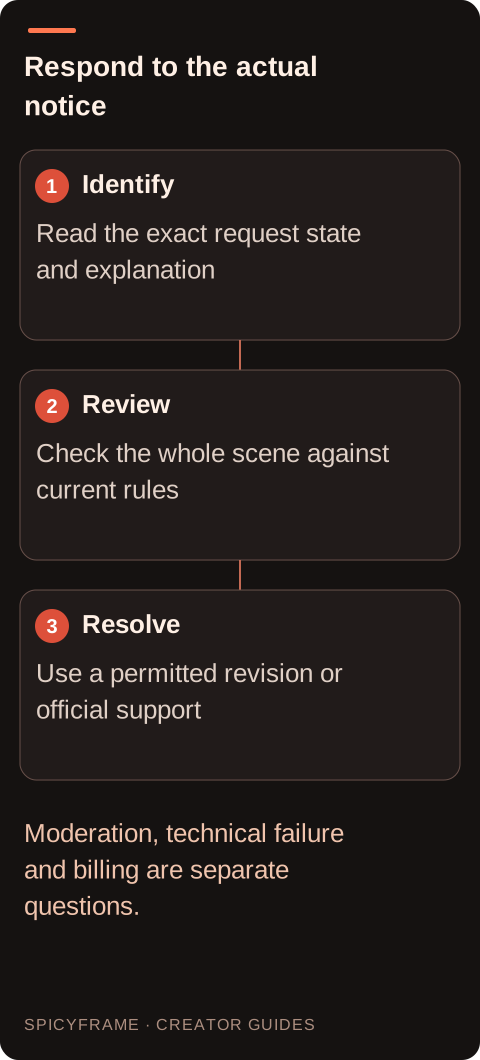
If a permitted fashion brief is unclear, rewrite it to describe the actual adult clothing, ordinary movement and lighting you want. For example, identify a tailored evening jacket and one gentle glance instead of relying on a vague mood label. Remove contradictory scene demands because they make the creative task less definite, not because shorter wording is a moderation trick. If the service gives a specific restriction, respect it. Do not change spelling, conceal a subject's identity or use another account to defeat that restriction. The glamour prompt guide offers non-explicit visual vocabulary. A valid revision changes or clarifies the project itself; it does not merely camouflage the same disallowed objective.
If you believe a permitted request was handled incorrectly, use the provider's official appeal, feedback or support route as offered in the current interface. Include the exact notice, product surface, date and relevant request information. Share only what is necessary, especially when the source is a private adult glamour photograph. Do not send account credentials or unnecessary personal data to third-party “unblock” services. Keep the support question specific: ask what the notice means for that request or what documented next step applies. A support answer may clarify the policy or technical state, but do not promise that an appeal will succeed or that a paid plan changes a content decision.
Suppose an adult creator submits an authorized portrait in a long evening coat and receives a message containing the word moderated without a detailed explanation. A sensible plan is to preserve the exact notice, confirm that the intended scene is non-explicit and check whether the job is blocked, pending or complete in the official interface. If the state remains unclear, the creator contacts official support with the request details and avoids duplicate paid submissions. This is a hypothetical process, not a tested Grok case. The creator does not assume the coat, a particular adjective or the account location caused the decision. Those would be guesses until supported by the service's own explanation.
A moderation notice does not by itself establish whether a charge occurred, whether a quota was consumed or whether a refund applies. Check the actual order or account record and the provider's current terms. Do not promise a universal credit rule based on another service's policy. For SpicyFrame, confirmed failed renders have failure handling, while disliking a completed creative result is a different case. That distinction should not be transferred automatically to Grok. The pay-as-you-go guide explains SpicyFrame's purchase model. If a transaction is involved, preserve the receipt and communicate the factual issue clearly rather than assuming that every moderation outcome has the same billing consequence.
The next step may be a clearer non-explicit brief, a different authorized source, an official review request or a decision not to generate the scene. If you use another product, choose it because its documented workflow fits a permitted project, not as a route around the first service's restrictions. Review any completed clip for adult identity, wardrobe continuity and alignment with consent before publishing. Record the outcome narrowly: a particular request was refused or a particular notice was resolved. Do not turn one case into a universal claim about what Grok permits. A useful moderation explanation helps a creator understand the observed state and act appropriately without inventing causes, guarantees or evasion techniques.
| Requirement | Decision | Evidence to check |
|---|---|---|
| Notice explicitly names moderation | Read the stated reason | No hidden trigger is guessed |
| Player is blank without explanation | Check status and technical context | Blank output is not automatically called moderation |
| Permitted brief is ambiguous | Describe the real fashion scene clearly | Intent is clarified rather than concealed |
| Decision seems incorrect | Use official review or support | Only necessary private information is shared |
| Payment status is uncertain | Check transaction records separately | Billing consequences are not assumed |
No. Content handling and technical failure are different categories. Read the exact official notice and check the request state before deciding what happened or what action follows.
Not unless the service explains it. Do not infer a hidden trigger from one result or build a workaround around speculation about individual words.
Yes, describe the actual clothing, ordinary action and light clearly. The revision should make a genuinely permitted project more definite, not disguise a prohibited objective.
Do not assume that. Account entitlement and content rules are separate questions, and no universal paid exemption is established by the official source reviewed here.
No universal billing consequence is established here. Check the actual transaction, current terms and official support response for that request rather than borrowing another service's policy.
The exact notice, product surface, date and relevant request or order information. Remove unnecessary private material and never share account credentials with an unofficial unblock service.
External pages, opened in a new tab. Rankings reflect the time of writing.