Are these tested Grok outputs?
No. They are proposed non-explicit adult fashion briefs, not generation benchmarks or evidence that a current Grok mode will accept or reproduce them exactly.
SPICYFRAME · PRACTICAL GUIDES
Plan non-explicit Grok glamour scenes with adult eveningwear, clear motion and cinematic light, using adaptable examples without claims about mode access.
5 seconds · 480p · $3.99. Pay per video, no subscription required.
Updated

Grok spicy mode examples are often presented as magic phrases, but a useful prompt is a clear visual brief. These examples focus on non-explicit adult glamour: eveningwear, confident fashion posing and cinematic light. They do not promise access to a current Spicy control, override a provider's rules or guarantee acceptance. Check the current official interface and content conditions before using any example. The official X Help page does not document a universal consumer Spicy prompt syntax. For broader context, read the Grok spicy guide. Treat the examples below as adaptable planning material, and use only authorized images of consenting adults or fictional adult characters you are entitled to depict.
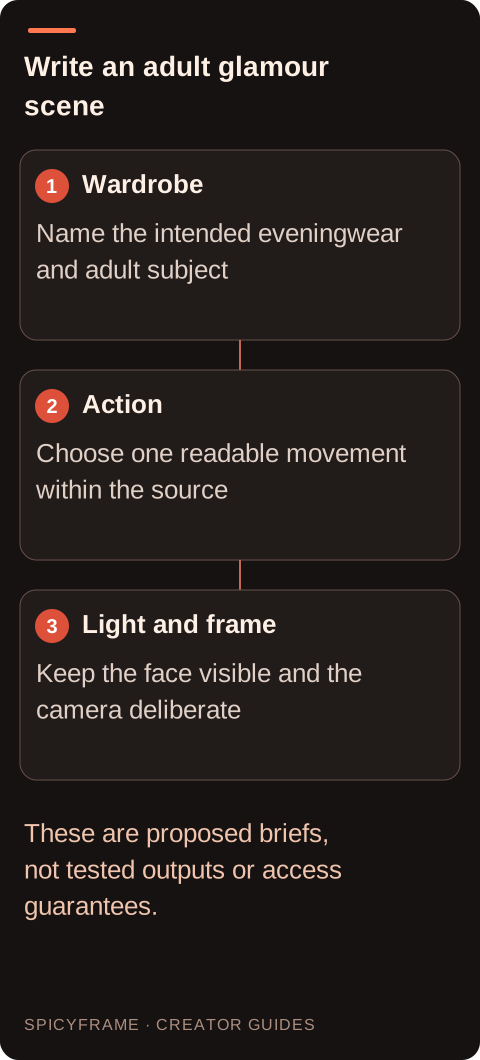
A compact scene can name the adult subject and outfit, one primary action, the light and setting, and the framing. That order keeps the prompt readable and makes contradictions easier to spot. If a reference is supplied, describe the intended continuity rather than asking for a new person or outfit at the same time. A small gaze shift and a steady camera can communicate confidence without complex choreography. The glamour prompt guide provides broader style vocabulary. Use words that correspond to visible choices; “dramatic” is less precise than a soft red background glow with a readable face. The aim is one coherent shot, not a list of fashionable adjectives.
Proposed prompt: “Clearly adult fashion subject in the reference velvet evening jacket, calm upright posture, one gentle glance toward the lens, soft amber side light with a restrained red background glow, steady vertical medium portrait.” This is an untested example. Its main action is the gaze shift, while the light supplies the glamour mood. Before using it, check that the reference shows the face and jacket lapels clearly. If the source is tightly cropped, keep the movement small. Review the result for changing lapel shape, facial drift and an unwanted camera push. Do not add a walk and full turn merely to make the prompt longer; those actions ask for a different shot and more unseen geometry.
Proposed prompt: “Clearly adult model in the same long burgundy coat, poised standing fashion pose, a light breeze moves the coat hem once, face remains clearly visible, stable soft studio light, still full-length vertical composition.” This is a planning example, not a verified result. It makes the garment the moving element and leaves the person largely calm. The source needs enough space below and beside the hem for that movement. If the coat already touches the frame, prepare another crop or source before generation. The fashion video guide explains useful continuity checks. Watch for changing fastenings, a hem that stretches unnaturally or a breeze that unexpectedly becomes a large body movement.
Proposed prompt: “Clearly adult fashion character in a tailored black evening suit beside a city window at night, one small shift of posture toward the camera, distant city lights remain soft and steady, gentle neutral key light on the face, fixed vertical composition.” This example is hypothetical and non-explicit. It separates the subject's readable face from the atmospheric background so the scene does not depend on extreme darkness. If the source contains reflections, inspect them for duplicate faces or inconsistent movement. Avoid adding a camera orbit when the window reflection is already complex. The lighting guide helps maintain a coherent relationship between the face light and the city background rather than asking every visible light to change at once.
A still camera, a slight push and a broad orbit ask for different amounts of new information. Choose the simplest camera behavior that serves the fashion mood. A close source with little background is a weak basis for a large reveal of the room. A flat illustration may lose its graphic character if the prompt asks for realistic lens behavior and changing perspective. The camera movement guide explains these distinctions. If you request a small camera move, keep the subject action restrained and define what should remain in frame. Prompt wording expresses a desired result; it is not a set of guaranteed endpoint, mask or region-lock controls in every consumer tool.
After a result, identify the concrete mismatch: the collar changes, the face turns too far, the frame zooms or the background flickers. Then revise the part of the brief related to that issue. A smaller turn may reduce exposure of unseen garment structure; a steady light instruction may make the intended illumination clearer. If the reference lacks detail, choose a stronger source instead of expecting more adjectives to restore it. Do not use revision as a method for disguising prohibited intent. If the service refuses a request, read the official reason and choose permitted next steps. These examples are for ordinary adult fashion scenes and do not establish that any particular model or mode will produce them faithfully.
Watch the entire clip at normal speed, then inspect the face, hands, clothing and background at several points. Check that the subject remains clearly adult and the presentation stays within the authorized non-explicit brief. Keep any exact titles, logos or scripted audio for a suitable external finishing workflow rather than assuming a scene prompt controls them precisely. If you publish a prompt example alongside an output, state whether it is a proposed brief or an actual documented result. This article's examples are proposed briefs only. That distinction prevents an attractive writing example from becoming an invented performance claim and lets readers adapt the scene while understanding the uncertainty inherent in generated movement.
| Requirement | Decision | Evidence to check |
|---|---|---|
| Velvet jacket portrait | Use one gentle gaze shift | Face and lapels remain stable |
| Long coat fashion shot | Move the hem with a restrained breeze | Frame leaves space for the fabric |
| City-window eveningwear | Keep face light steady | Reflections and background do not compete |
| Source offers little room | Use a still or modest camera brief | No unsupported room reveal is demanded |
| Result misses one requirement | Revise that specific cause | No unrelated actions are added |
No. They are proposed non-explicit adult fashion briefs, not generation benchmarks or evidence that a current Grok mode will accept or reproduce them exactly.
No. Prompt wording does not establish account access or override service rules. Verify the current official workflow and use only genuinely permitted content.
They use clearly adult subjects, eveningwear, confident posture and cinematic lighting without explicit content. The mood comes from fashion direction rather than sexual instructions.
Not automatically. One primary action is easier to frame and review. Extra turns, gestures and camera movement introduce more relationships that must remain coherent through time.
Only when you have the relevant rights and adult consent, and the current workflow supports the input. Adapt the action to what the reference actually shows clearly.
Identify the movement or source ambiguity involved, simplify the action and clarify the intended garment. Review the full sequence rather than judging only an attractive opening frame.
External pages, opened in a new tab. Rankings reflect the time of writing.