Does this guide treat Veo 3 and Veo 3.1 as identical?
No. The search topic includes Veo 3, but the current Google overview reviewed here describes Veo 3.1. Capabilities are attributed to that documented version and access route.
SPICYFRAME · PRACTICAL GUIDES
Compare Veo and Seedance for non-explicit adult glamour scenes through version checks, reference design, ambient sound and practical delivery criteria.
5 seconds · 480p · $3.99. Pay per video, no subscription required.
Updated

Veo vs Seedance for glamour can hide two separate questions: which model family has the workflow you need, and which service actually exposes it? Searches often mention Google Veo 3 and Seedance 2.0, but Google's current video overview reviewed on October 8, 2026 describes Veo 3.1, while SpicyFrame uses Seedance 2.5 through Segmind. This guide keeps those labels distinct. It does not transfer current 3.1 features backward to every Veo 3 offer or call a 2.5 output a 2.0 test. The comparison concerns permitted adult fashion and non-explicit glamour. No hands-on model ranking is claimed. A useful decision starts with your own authorized reference, required movement, soundtrack needs, and final delivery format.
Google's current Gemini API video overview describes Veo 3.1 as a model with native audio, video extension, frame-specific generation, and image-based direction. It also distinguishes Veo from another video-generation route in the API, so choosing the word Google alone is not sufficiently precise. ByteDance's Seedance 2.0 overview describes multimodal inputs, while Segmind documents Seedance 2.5 separately. SpicyFrame's consumer workflow is narrower than that underlying API documentation: it accepts authorized image references and creates vertical MP4 clips with ambient sound. It does not expose a last-frame endpoint, seed control, or a timeline editor. Compare requirements against the specific interface and version you plan to purchase. A documented capability is relevant only when your selected route lets you use it.
Use a clothed adult model in a clearly editorial setting, such as a satin evening dress under studio lighting or a structured jacket on a quiet city set. Obtain permission for any real person's likeness and for the photograph itself. Review the current content rules of the chosen Google or hosted route and the relevant Seedance service before uploading. An image being non-explicit does not guarantee acceptance by every provider. The Veo content guide and Seedance policy context help frame the question without promising unrestricted output. If the original idea is outside a provider's rules, choose a genuinely different permitted fashion concept. Changing terminology while keeping a prohibited request is not a valid production strategy or comparison method.
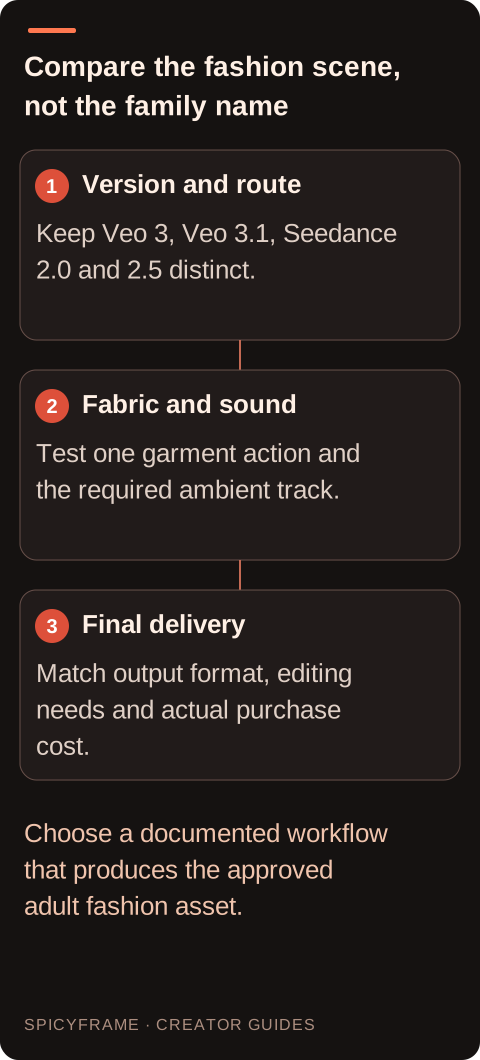
For a meaningful test, the reference should establish the adult subject, garment construction, color, and lighting clearly. Avoid mixing a front view of one dress with a back view of another. If a second reference helps explain a seam or accessory, keep it consistent and record its role. SpicyFrame supports up to 12 authorized JPG, PNG, or WebP images under 10 MB each, but its interface does not inherit every multimodal input mentioned in Segmind's API documentation. For a Veo route, use the reference options actually supported by that selected model and interface. Keep the garment and intended action as similar as the tools allow, then acknowledge any unavoidable input difference when interpreting the result. Otherwise you may be measuring reference preparation rather than generation quality.
An adult fashion film often needs atmosphere rather than spoken performance. A restrained room tone or soft environmental sound can support a slow walk without competing with the garment. Both Google's Veo 3.1 overview and Segmind's Seedance 2.5 documentation discuss native audio, but product-level promises still differ. SpicyFrame supplies ambient audio and does not provide voice cloning or guaranteed scripted lip-sync. If you need a particular brand line, music track, or exact rhythmic edit, plan an authorized audio stage separately. The image-to-video audio guide helps distinguish generated ambience from editorial sound design. In a comparison, listen for unwanted voices, abrupt changes, or sound that implies an event not present in the picture, rather than scoring only whether an audio track exists.
Try one deliberate action: a small model turn with a steady camera, or a gentle camera approach while the subject holds a composed pose. Do not combine a moving camera, changing outfit, dramatic lighting shift, and location transition in the first comparison. Those demands make garment drift difficult to diagnose. For a satin dress, watch the highlight move with the fabric instead of boiling independently. For lace, inspect whether the pattern and opaque lining remain coherent. The fashion video guide gives a broader production framework. Evaluate the beginning, middle, and end of each clip. A strong opening frame followed by unstable clothing is not equivalent to a usable fashion sequence, even if the first frame looks more impressive in a side-by-side screenshot.
SpicyFrame's output is vertical 9:16 MP4 with 5-, 10-, or 30-second choices and Medium 480p, High 720p, or Ultra 1080p quality. A ten-second High clip is $8.99; Ultra 1080p for ten seconds is $23.99. These are SpicyFrame prices, not direct Seedance API rates or a quote for Veo. Check the selected Veo service's current duration, resolution, pricing, and export terms before comparing totals. Include retries and any editing needed to reach the same final brief. Guest one-off purchases and optional weekly plans are different financial commitments. No 4K option or timeline assembly is promised in SpicyFrame. If your deliverable requires either, include the external work or choose a route whose current documentation explicitly supports the requirement.
Score each completed test on garment continuity, adult subject consistency, natural motion, sound suitability, and delivery effort. Write down any constraint you could not test, such as a feature unavailable on the selected plan. Do not turn provider showcase language into independent evidence or describe a single paid attempt as a definitive model review. A modest test can still answer the practical question of whether the workflow serves your campaign. Keep the final approved file and the settings that produced it, then revisit the choice when versions change. For SpicyFrame, confirmed failures qualify for refunds or credits, while a disliked completed render is not automatically a failure. A comparison budget should account for creative exploration honestly and stop when the required fashion asset is ready.
| Requirement | Documented Veo context | SpicyFrame context |
|---|---|---|
| Version | Current Google overview describes Veo 3.1 | Seedance 2.5 through Segmind |
| Reference workflow | Image-based and frame-specific direction described | Authorized image references in the consumer interface |
| Audio | Native audio described for Veo 3.1 | Ambient audio without scripted lip-sync promise |
| Continuation | Video extension described in Google overview | No exposed extension endpoint or timeline editor |
| Delivery purchase | Verify selected service and plan | Vertical MP4 at 5, 10 or 30 seconds |
No. The search topic includes Veo 3, but the current Google overview reviewed here describes Veo 3.1. Capabilities are attributed to that documented version and access route.
No. SpicyFrame uses Seedance 2.5 through Segmind. Seedance 2.0 is a separate model version with its own official overview and should not be used as an interchangeable label.
There is no claimed benchmark winner here. Compare an authorized adult reference, a simple action, and explicit garment criteria, then judge the actual clips and total production effort.
No. Native audio describes a generation capability, not a universal script guarantee. SpicyFrame's stated feature is ambient audio, without voice cloning or guaranteed scripted lip-sync.
No. Google's overview describes Veo 3.1 capabilities, but the selected application, plan, and model determine what you can actually use. Verify the specific workflow before purchasing.
Keep model version, service, references, prompt, settings, charge, and approval criteria. Note input differences and unavailable features so the result is a useful project comparison rather than an unsupported ranking.
External pages, opened in a new tab. Rankings reflect the time of writing.