Can the same clip work as a Reel and a Story?
Possibly, but each needs its own layout and publishing preview. Interface elements, added stickers and surrounding context can obscure the garment or disclosure that was readable in the other placement.
SPICYFRAME · PRACTICAL GUIDES
Prepare non-explicit adult glamour video for Instagram with fashion-led framing, clear AI context, readable overlays and a careful review before sharing.
5 seconds · 480p · $3.99. Pay per video, no subscription required.
Updated

Glamour AI video for Instagram should have a recognizable editorial subject: a satin jacket under evening light, a monochrome outfit or a carefully coordinated accessory. Keep the presentation focused on adult fashion and styling rather than erotic body emphasis. A hypothetical post about a black velvet blazer could show texture and silhouette while the caption explains the styling choice. Write that idea before selecting a reference. If the video makes sense only through a suggestive crop, choose a different composition. The opening image should establish the garment and the person as a consenting adult or a clearly fictional adult character. Do not imply that the animation documents a real runway, celebrity appearance or brand collaboration when it is an independent visual study.
An ordinary post, Story, Reel and paid advertisement are distinct publishing contexts. Check current official Instagram and Meta guidance for the intended placement, including content eligibility, synthetic-media disclosure and any commercial relationship. The official policy page was reachable during this research but its full operative text was not available for reliable extraction, so this guide does not claim exact current permissions or mandatory label wording. A fashion description alone does not establish acceptance. Review the completed image, movement, caption and destination together. Do not hide the AI context or use misleading spelling to bypass moderation. If a planned styling treatment remains uncertain under the current rules, choose a clearly non-explicit editorial composition or obtain official clarification before publishing.
Sketch the vertical frame with the intended headline, account interface and any link or commercial disclosure visible. Keep the face, garment neckline, hands and essential accessory away from areas likely to be obscured. There is no permanent universal pixel allowance that can replace the actual publishing preview. A blazer may look balanced in a clean MP4 but be cut awkwardly when a caption covers its hem. Use the vertical framing guide to choose a source with breathing room around the subject. Avoid relying on a border added after generation to rescue an unsuitable crop. Preview the proposed composition on a phone before producing motion, and make the visual hierarchy clear enough that a viewer can identify the styling idea without opening a long caption.
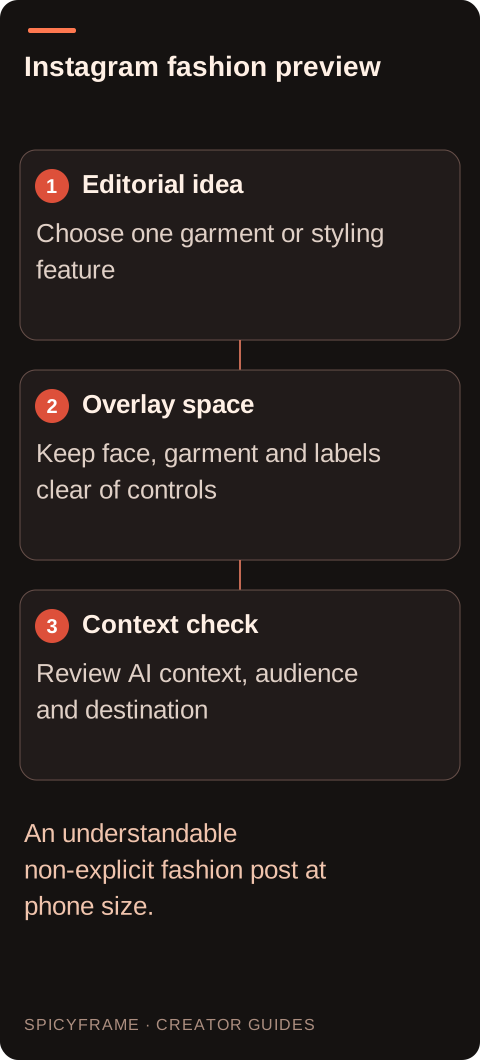
For the velvet-blazer example, plan a gentle turn of the head or a slow camera approach while the outfit remains unchanged. Do not request undressing, a shift in coverage or a movement that makes an intimate body area the focal point. Review the motion path against the reserved overlay space. The camera movement guide can help choose one deliberate move rather than combining an orbit, zoom and pose change. Jacket lapels, seams, buttons and jewelry are useful checkpoints because they can drift even when the face seems stable. If the garment is a real product, the clip must not invent a different cut or fastening. Keep accurate stills available wherever exact clothing detail matters.
Use external typography or the platform's current tools for names, styling notes and required disclosures. Generated writing on a wall or garment is not a reliable caption. Describe the scene as an AI-assisted fashion animation when that accurately reflects the process, and apply any current required platform controls. If the subject is fictional, keep the account and post context honest rather than attaching a real person's biography. If a real adult is depicted, obtain approval for the final name, caption and audience. Make the core message understandable with sound muted. Generated ambience should not imply that the person spoke, sang or attended a real event; any narration or music added afterward needs its own authorization and review.
Build a still mockup with the intended Reel or Story controls before choosing the final generation. A five second Medium 480p draft costs $3.99 and can reveal whether a blazer moves behind the caption or the face reaches the edge of the usable area. SpicyFrame creates vertical 9:16 MP4 clips of 5, 10 or 30 seconds with ambient audio; High 720p and Ultra 1080p provide larger options after the composition is approved. Upload only authorized JPG, PNG or WebP references under 10 MB each, with up to 12 supported. The studio does not add reliable exact captions or post to Instagram. Finish the label and styling note externally, then inspect the processed preview with sound muted. Reserve the higher-cost version for a layout that already communicates the outfit clearly. A completed render you dislike is not automatically a failure eligible for settlement, so define the visual question before each paid revision.
Watch the entire clip, then review the chosen cover and any still likely to be shared. Check facial consistency, stable garment coverage, correct jewelry and absence of unintended brand marks. The artifact guide helps identify changing hands or fabric edges that may be hard to notice at full speed. Ask a second reviewer to describe what the post appears to claim. If they infer a sponsored campaign, a real appearance or a product feature that was never intended, revise the caption or scene. Do not use synthetic beauty changes to claim a cosmetic result. The adult subject should review the actual generated version, because approval of the original portrait does not guarantee comfort with the final expression or movement.
Inspect the processed preview with interface controls visible and sound both enabled and muted. Verify the destination, if any, and ensure that it matches the styling or product promise. A non-explicit fashion post should not serve as a misleading route to unrelated material. Save the approved MP4, external text, source permission and review date together. If you adapt the clip into a Story later, repeat the crop and audience checks rather than assuming the Reel approval covers the new layout. The privacy guide explains why storage, generation and sharing are different choices. Keep the asset unpublished if a policy question or subject approval remains unresolved; an attractive draft is still only a draft until its intended use is clear.
| Decision | Practical action | Approval evidence |
|---|---|---|
| Fashion idea | Name one styling decision | Opening frame communicates the garment |
| Placement | Review Reel, Story or advertisement separately | Current rules and controls are checked |
| Overlay space | Mock up interface and labels | Face and clothing remain unobscured |
| Wardrobe review | Inspect seams and coverage throughout | No misleading product change appears |
| Final context | Compare video, caption and destination | Identity and commercial relationship are clear |
Possibly, but each needs its own layout and publishing preview. Interface elements, added stickers and surrounding context can obscure the garment or disclosure that was readable in the other placement.
No. The actual image, movement, text and destination matter. Check the current official rules for the chosen placement and keep the treatment clearly non-explicit rather than relying on a category label.
Use accurate external text or the platform's current controls. Generated lettering can distort, disappear or become unreadable after cropping, so it should not carry essential identity or disclosure information.
Only when the permissions cover the transformation and intended publication, including the styling context. Obtain final approval for the generated expression, movement and caption rather than assuming the original portrait approval is sufficient.
No. A larger output does not guarantee seams, buttons, labels or coverage. Compare the complete clip against accurate product photographs and reject changes that misrepresent the garment.
Clarify the actual relationship and production method, and remove misleading brand associations. Do not imply an endorsement or partnership simply because a synthetic editorial scene resembles commercial fashion advertising.