Does Luma permit pornographic or sexually explicit generation?
The official terms reviewed for this guide prohibit that use. This article addresses permitted non-explicit adult fashion and glamour, not methods for obtaining prohibited material.
SPICYFRAME · PRACTICAL GUIDES
Review Luma’s current NSFW restrictions, image rights, paid commercial-use conditions and privacy questions for permitted adult glamour video projects.
5 seconds · 480p · $3.99. Pay per video, no subscription required.
Updated

Luma NSFW policy questions should begin with its current Terms of Service rather than an old screenshot of a generation interface. The official terms reviewed on October 8, 2026, dated May 14, 2026, prohibit using the service to generate pornographic or sexually explicit content. They also address deceptive output, impersonation, child sexualization, and other harmful uses. This guide concerns permitted non-explicit adult fashion and glamour, such as an opaque evening outfit in a studio portrait. It does not claim that every image in that category will be accepted. The terms also contain important commercial-use and source-rights conditions that matter even when the subject is fully clothed. Read the agreement for the actual route you use, since API or enterprise access can involve separate terms.
A product family can include consumer applications, APIs, enterprise agreements, and third-party tools. Luma's terms distinguish some of these arrangements and discuss third-party technology and AI tools. Do not assume a feature demonstrated in one route is included in another or that one contract answers every data-handling question. Record the account, selected model, plan, and access route for your project. If an agency is purchasing on behalf of a client, establish who is accepting the terms and whether that person has authority to do so. This administrative detail can affect commercial delivery and confidentiality. A fashion brief should be evaluated against the service actually producing the clip, not simply against a familiar Luma or Dream Machine name appearing in a tutorial.
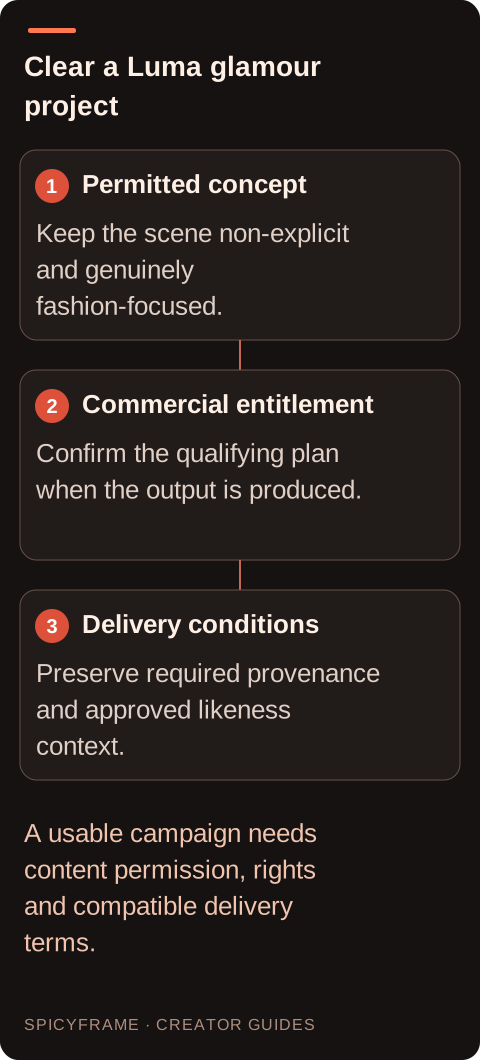
A useful permitted concept might show an adult model in a lined satin dress making a gentle turn under soft studio light. The visible objective is the dress shape and movement, not sexual arousal or nudity. Clearly define wardrobe, pose, camera distance, and the intended audience. If the desired result is pornographic or sexually explicit, it conflicts with the reviewed terms. Do not relabel that request as editorial in an effort to bypass the boundary. For ordinary adult fashion that is still ambiguous under the service's current rules, seek clarification before promising delivery. The fashion production guide helps convert a broad glamour direction into a concrete shot, while the safety guide covers permission and depiction concerns.
Luma's terms say not to upload input unless you own it or are fully authorized to grant rights in all its elements. They place responsibility for input and the consequences of providing it on the customer. For a fashion photograph, that can involve the photographer's copyright, the model's likeness permission, brand material, and any background artwork. A file being available online is not evidence that you may upload it for generation. Ask for a license that fits the proposed AI processing and publication, and record the source. The photographer workflow is useful when turning an existing shoot into motion deliverables. If a client supplies the image, get confirmation of the relevant rights instead of assuming that possession settles the issue.
The reviewed Luma terms say outputs may be used commercially when produced during an active paid subscription that allows commercial use of those outputs. That is more specific than assuming any downloaded file can be used in an advertisement. Confirm the selected plan's current permissions before creating the final asset, and retain the relevant subscription record. A free exploratory render and a paid commercial deliverable may need different treatment under the terms. Do not infer that upgrading later automatically changes the status of earlier outputs without checking the contract. For client work, record when the approved output was produced and under which qualifying plan. Content permission and commercial entitlement are separate: an allowed fashion scene can still have usage conditions attached to the purchase route.
Luma's terms reserve the ability to include watermarks, content credentials, provenance metadata, or other identifying information and prohibit removing or circumventing those signals. They also address misrepresenting the source of output and identify disclosure obligations for outputs resembling a person. Review the current wording for your project rather than assuming watermark-free means disclosure-free. A fashion campaign can look polished while still explaining appropriately that an image or motion sequence was generated. Keep a clean approval record showing what is synthetic and what comes from the original shoot. Do not present invented garment behavior as a photographed product test. If a client has a specific delivery rule about branding or metadata, establish compatibility before purchase rather than planning to strip identifiers from the final file.
A blocked request should be handled through the provider's current support process or by changing the actual concept to a permitted one. Do not assume every rejection is a technical failure or that it creates an automatic refund entitlement. Keep the relevant message and job details. Separately, assess whether the reference is appropriate to upload at all under your confidentiality obligations. The privacy guide distinguishes processing, storage, and publication, which are often conflated in private glamour projects. Read the applicable Luma data terms and any relevant third-party terms for the selected workflow. An image hidden from a public gallery can still be processed by the service. Avoid describing a privacy setting as an offline guarantee unless the actual architecture supports that claim.
If Luma's contract or feature set does not fit the project, compare alternatives using the same permitted brief and rights record. SpicyFrame uses Seedance 2.5 through Segmind for vertical 9:16 MP4 clips with ambient audio, at 5, 10, or 30 seconds. It supports up to 12 authorized JPG, PNG, or WebP references under 10 MB each and paid guest purchases alongside optional weekly plans. It does not offer explicit content, a timeline editor, 4K output, voice cloning, or guaranteed scripted lip-sync. Storage-off prevents library and draft saving while generation still requires processing. These are SpicyFrame's product facts, not a claim that it inherits Luma's terms or solves every privacy requirement. Choose the route whose documented conditions match the authorized fashion deliverable, then inspect the completed clip before publication.
| Requirement | Reviewed terms context | Evidence for the project |
|---|---|---|
| Content scope | Pornographic and sexually explicit generation prohibited | A permitted clothed editorial brief |
| Input rights | Ownership or full authorization required | Image license and relevant permissions |
| Commercial use | Qualifying paid subscription at production time | Plan and generation records |
| Provenance | Included identifying signals must not be circumvented | Delivery requirements compatible with the export |
| Confidentiality | Contract and processing route matter | Approved data-handling arrangement |
The official terms reviewed for this guide prohibit that use. This article addresses permitted non-explicit adult fashion and glamour, not methods for obtaining prohibited material.
No. The reviewed terms tie commercial use to outputs produced during an active paid subscription allowing that use. Check the exact plan and production date before publishing a client campaign.
Do not assume so. The reviewed commercial-use wording refers to the subscription status when outputs were produced. Confirm the applicable terms or obtain clarification for earlier generations.
The reviewed terms prohibit removing, altering, obscuring, or circumventing included watermarks, metadata, or content credentials. Resolve any delivery conflict with the provider before creating the final asset.
Luma's terms place responsibility on the customer to own or have authorization for input rights. Check the photograph, depicted person, and any other protected elements before uploading.
No. Gallery visibility, processing, retention, and data use are separate questions. Review the actual privacy and contract terms for the chosen account and workflow before submitting confidential references.
External pages, opened in a new tab. Rankings reflect the time of writing.