AI couple kissing photos: prepare adult references
Prepare AI couple kissing reference photos with both adults’ consent, compatible face angles and clear identity roles, then review a brief gentle kiss.
5 seconds · 480p · $3.99. Pay per video, no subscription required.
Updated
AI-generated editorial illustration: a red satin evening look and warm lounge lighting. The photograph illustrates a fashion brief, not a tested video output.
Prepare two consenting adults before a romantic animation
An AI kiss photo workflow starts with two adults who have both agreed to the specific non-graphic romantic transformation. Permission to share a portrait does not automatically mean permission to depict a kiss. Confirm the people, intended action, audience and publication context before preparing references. Keep the proposed scene brief and restrained, such as a gentle kiss followed by a relaxed pause, with both adults fully clothed. This guide concentrates on reference geometry and identity separation rather than repeating a broad generator tutorial. The AI kissing video generator covers the general use case; here the central question is whether the source images give a coherent basis for two recognizable adults in one moment.
Choose references that show compatible face angles
A clear three quarter or profile view can provide useful evidence for a gentle approach. Two extreme frontal selfies with different camera distances may be harder to combine plausibly. Look at head height, eye line and how much of each face is visible. The adults do not need identical poses, but the planned movement should not require both to rotate dramatically into unseen views. If a shared authorized photograph already places them together at a suitable distance, it can communicate the relationship more directly than unrelated images. Keep the image selection within the agreed scope and do not add a third person’s face as a substitute for missing detail.
Keep the identities and wardrobes distinct
Label each adult’s reference role in a simple note, such as adult A in a blue jacket and adult B in a cream sweater. Use the same labels in the prompt without treating clothing as the only identity cue. Check hairstyle, face shape and accessories as well. The multiple reference guide explains how @Image1 and @Image2 can indicate source roles. Those mentions do not guarantee the system will keep identities separate. Avoid using several different looks for the same adult in the first test. Conflicting clothes or ages can cause the model to blend faces or transfer a garment feature from one person to the other.
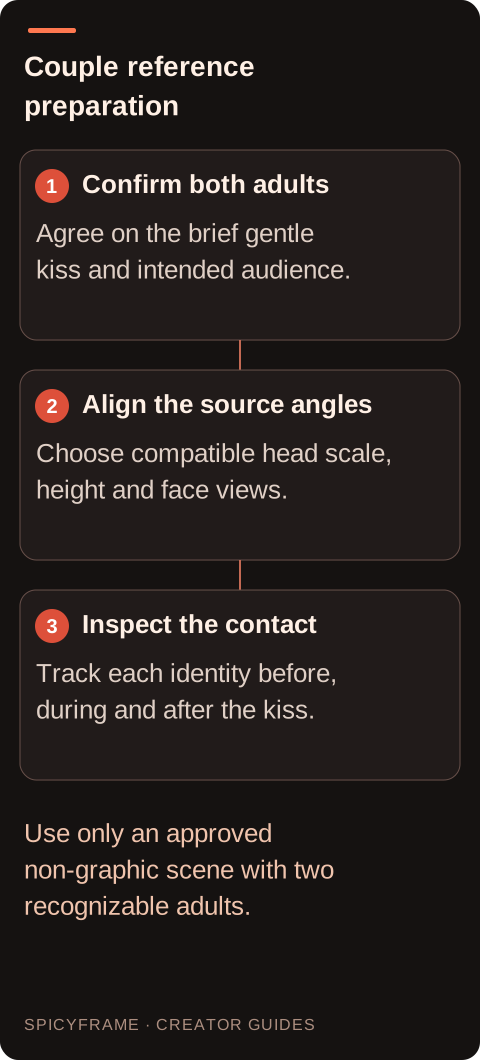
Confirm both adults: Agree on the brief gentle kiss and intended audience.. Align the source angles: Choose compatible head scale, height and face views.. Inspect the contact: Track each identity before, during and after the kiss.. Use only an approved non-graphic scene with two recognizable adults.
Plan the distance and movement conservatively
A brief gentle kiss requires the heads to approach, make contact and separate or settle without faces merging. Keep the camera steady and the action small. A large embrace, dramatic dip or simultaneous orbit adds hands, bodies and unseen surfaces to an already difficult contact event. The reference should support the head angles and relative height. If the adults begin far apart, the system must invent more travel and body movement. A closer shared pose may make the intention clearer, but do not force the source into a misleading composite without both adults’ approval. A simple affectionate pause can be an acceptable alternative when the contact itself does not render coherently.
Write the action and role mapping plainly
A proposed brief might say: “Use @Image1 for adult A in the blue jacket and @Image2 for adult B in the cream sweater. Both consenting adults stand at similar height in soft evening light. They share one brief gentle kiss, then pause comfortably, fully clothed, with a steady camera and quiet outdoor ambience.” This is a hypothetical prompt, not a tested outcome. Avoid detailed sexual language or claims about the adults’ real relationship. The goal is a non-graphic romantic scene within their permission. If the faces blend, simplify the action or choose more compatible references rather than escalating the prompt with more elaborate contact instructions.
A hypothetical two adult reference review
Imagine a couple has agreed to a short anniversary style animation from their own authorized portraits. One image is a close phone selfie and the other a distant formal portrait. Before generating, they choose a more comparable pair with similar head scale and clear three quarter views. Their acceptance note identifies each adult’s hairstyle, glasses and outfit, and limits the action to one gentle kiss. After a five second test, they review the approach, contact and separation separately. If one face becomes the other, the result is rejected. This example proposes a workflow; it does not claim reliable kissing contact or report a tested success rate.
Inspect contact without losing sight of consent
Watch the adults before they meet, during the contact and immediately afterward. Faces should not fuse, noses should not change sides and glasses should not disappear into another head. Hands and sleeves should remain connected if visible. The identity guide helps with facial checks, but a couple scene also needs role checks: each person should return to their own recognizable features. Ask both adults to review the exact final clip and accompanying caption where appropriate. A technically smooth animation can still fall outside the agreed scope if its edit, sound or text implies a relationship or event they did not authorize.
Keep delivery and permission records specific
SpicyFrame generates vertical 9:16 MP4 clips with ambient audio in 5, 10 or 30 seconds. A short contact study is usually easier to review than a long romantic sequence. Resolution does not guarantee correct facial contact. Listen for unexpected speech and edit sound externally if needed. Keep a simple record of which two sources, prompt and approved export belong together, without collecting unnecessary personal information. The privacy guide can help you think about storage and sharing. Permission practices are context dependent and this is not a complete legal checklist. Present the result honestly as an AI animation when it could otherwise be mistaken for footage of an actual kiss.
AI couple kissing photos: planning decisions
Choice
Use when
Acceptance check
Compatible three quarter views
Both adults need limited rotation into the action
Faces remain recognizable through the approach
Shared authorized photograph
Relative height and distance are already clear
The image supports the agreed romantic movement
Distinct outfit labels
Two identity roles need clear prompt mapping
Clothing and features do not transfer between adults
Brief gentle contact
The concept needs a non-graphic kiss
Faces remain separate before and after contact
Final two person review
The scene will be shared beyond private drafting
Both adults approve the exact context and depiction
AI image-to-video questions answered
Do both adults need to agree to the kiss?
Yes. Use images you are authorized to transform and obtain both adults’ agreement to the specific romantic depiction and intended context. General permission to post a portrait does not automatically cover an AI generated kiss.
Are two front facing selfies enough?
They may provide identity evidence, but the kiss requires different angles and contact geometry. Choose compatible clear views and keep movement small. A suitable shared authorized photo can sometimes explain relative position more clearly than two unrelated selfies.
Can reference labels guarantee separate faces?
No. @Image1 and @Image2 clarify which source belongs to each adult, but they do not enforce identity separation. Review both faces before, during and after contact, including hair, glasses and distinctive features.
What if the faces merge at contact?
Reject that segment for a recognizable couple brief. Reduce movement, use more compatible angles or choose a noncontact affectionate pose. More resolution or a longer duration does not repair a fundamentally incorrect contact event.
Should I add a dramatic embrace?
Only if both adults approve and the source supports it, but it adds hands, body contact and occlusion to review. A first test with one brief gentle kiss and a steady camera keeps the main reference problem easier to assess.
Does approval of the sources approve the final clip?
Not necessarily. The generated action, edit and caption can change the meaning. Keep approval tied to the specific intended depiction and review the actual final version, especially when the output implies a real relationship or event.