AI lingerie brand video: accurate adult catalog work
Plan non-erotic adult lingerie catalog video with true garment construction, consistent coverage, authorized model references and truthful product details.
5 seconds · 480p · $3.99. Pay per video, no subscription required.
Updated
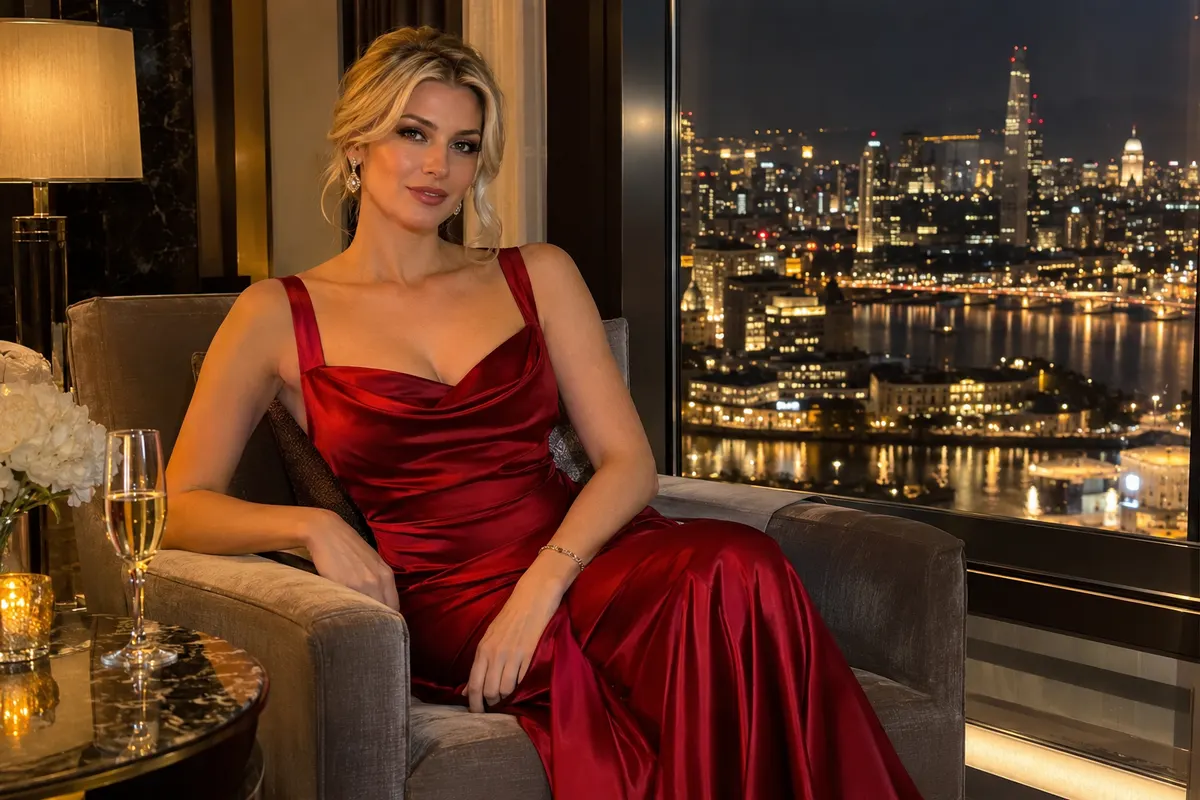
AI-generated editorial illustration: a red satin evening look and warm lounge lighting. The photograph illustrates a fashion brief, not a tested video output.
Treat the assignment as garment documentation
An AI lingerie brand video should present a real garment accurately within a non-erotic adult catalog brief. Begin with the item number, color, size shown and included pieces, then identify the detail the motion should help viewers inspect. A hypothetical brand might want a short front-facing presentation of a matching set on a consenting adult model. The purpose is to show straps, seams and fabric, not to emphasize intimate body areas or imply a different level of coverage. Keep accurate product photographs and specifications as the factual foundation. A generated clip can be a supporting illustration, but it cannot establish fit, support or construction quality. Write the commercial claim in plain language before deciding whether AI movement can responsibly support it.
Choose between an adult model and a product-only source
A model reference can show the intended styling context, while a flat lay or appropriate display form can isolate construction. Choose according to the information the shopper needs. Do not animate an identifiable person without their permission for the specific non-erotic lingerie catalog use, AI transformation and distribution. A general fashion release may not describe this context sufficiently. Confirm that the person is an adult and let them review the proposed framing before generation. For a product-only source, check that straps and fastenings are visible without overlapping props. The source photo guide helps assess sharpness and lighting, but it cannot supply missing garment evidence. Obtain a real detail photograph when a seam or clasp is obscured.
Build a garment accuracy sheet before motion
Record the actual strap count, lace pattern, seam placement, lining, fastening and color. Note which areas are opaque and which are intentionally sheer in the real product, then require the final representation to remain accurate without erotic framing. Do not ask the model to invent transparency, expose more skin or alter the garment's coverage. Use matching references from the same product variation; a different size or sample revision can create contradictory construction cues. The multiple-reference guide helps assign each image a job. Keep a side-by-side sheet for the reviewer so a plausible but incorrect lace edge is not approved merely because it looks attractive. Product accuracy needs someone familiar with the physical garment, not only an editor judging polish.
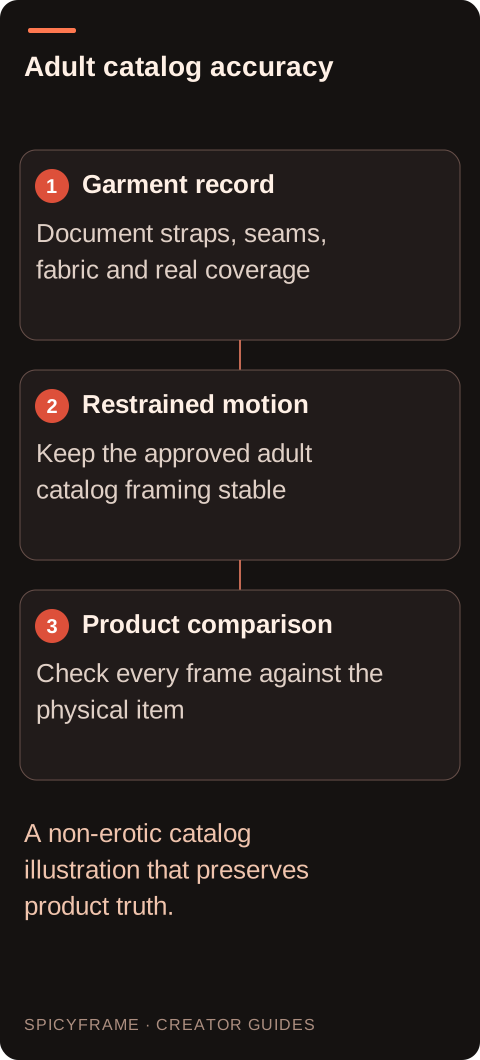
Garment record: Document straps, seams, fabric and real coverage. Restrained motion: Keep the approved adult catalog framing stable. Product comparison: Check every frame against the physical item. A non-erotic catalog illustration that preserves product truth.
Use minimal movement to reduce construction drift
A stable adult catalog pose or a small camera approach is easier to evaluate than a dramatic turn. Avoid actions that change the approved coverage or make the body, rather than the garment, the main subject. If only a front view is available, do not request a full rotation that invents the back fastening. For a product-only image, restrained light movement may show texture without changing strap geometry. The fashion video guide can support the editorial approach, but real fit and support demonstrations require verified footage. A prompt asking to preserve details is not a guarantee. Plan a short trial specifically to inspect the highest-risk seam, edge or fastening before commissioning a longer sequence.
Keep labels and product claims outside generation
Place the exact item name, color, size and care wording in external typography or normal product-page text. The model does not guarantee exact labels or logos. Do not use synthetic movement to claim lift, shaping, comfort or durability that has not been independently supported. If the animation makes fabric seem smoother, more opaque or more supportive than the real item, correct or replace it. Add appropriate AI context where required by the destination or necessary to prevent a misleading impression. Review the caption, adjacent photographs and purchasing options together. A technically accurate sentence can still be undermined by a visual that depicts different coverage or an altered silhouette. The shopper should understand precisely what the actual catalog item includes.
Spend the draft budget on the riskiest garment detail
Select the seam, fastening or lace edge most likely to change, then keep it visible in the first trial. A five second Medium 480p generation costs $3.99 and can expose construction drift before a larger catalog purchase. High 720p and Ultra 1080p add output detail but do not guarantee exact stitching or coverage. SpicyFrame accepts authorized JPG, PNG and WebP references under 10 MB each, up to 12, and produces vertical 9:16 MP4 with ambient audio in 5, 10 or 30 second lengths. Add product names and any precise brand assets externally. The studio is not a catalog editor and does not publish the listing. Evaluate the result against the garment sheet before deciding whether another render is justified. A polished image with the wrong strap is still the wrong product representation. Keep the adult model’s final approval and the merchandise reviewer’s decision separate so both responsibilities remain visible.
Review body geometry and garment truth as separate checks
Watch the complete clip for changing straps, disappearing seams, altered lace density and unintended exposure. Then inspect the adult model's face, hands and body proportions for drift that could misrepresent the approved presentation. The artifact guide helps locate these changes, but the decision to publish should follow the catalog accuracy sheet. Reject a frame that materially changes the garment even if it appears only briefly. Check the poster as carefully as playback because it may become the primary product image. Let the model review the actual output and intended caption. A non-erotic brief should remain non-erotic through movement, cropping and delivery, not merely in the source photograph.
Deliver a catalog asset suited to its destination
Check the current rules for the store, marketplace or advertising placement before upload. Non-erotic catalog intent does not guarantee acceptance on every platform. Prepare crops, exact overlays and any muted derivative externally, keeping the accurate master and product version together. Inspect the processed result beside the actual product photographs and selected variation. Confirm that the clip does not imply extra pieces or a different fabric finish. Save the source rights, model approval, garment accuracy sheet and final file as one asset record. If the product pattern or material changes, revisit the animation before reusing it. Do not promise sales improvements from the format; the practical goal is a clear, truthful catalog presentation that the brand and depicted adult can stand behind.
AI lingerie brand video: accurate adult catalog work: review decisions
Decision
Practical action
Approval evidence
Catalog purpose
Name the actual garment detail
Brief remains non-erotic and product focused
Adult permission
Approve context and AI transformation
Model reviews framing and final output
Construction
Record seams, straps and coverage
Clip matches the physical item
Claims
Use external accurate specifications
No unsupported fit or support effect
Delivery
Review destination and selected variation
Catalog media presents the same product
AI image-to-video questions answered
Can this be used for a non-erotic lingerie catalog?
It can support that kind of authorized adult product presentation, subject to accurate output review and the destination's current rules. Keep the focus on garment construction and avoid erotic framing or changes in coverage.
Does an ordinary model release cover this transformation?
Check the actual agreement. Consent should cover the lingerie catalog context, AI animation, intended audience and commercial use, with final review of the generated movement and framing by the depicted adult.
Can the generated clip demonstrate support or shaping?
Not as reliable evidence. Use verified product testing, accurate specifications and real footage for performance claims. AI motion may change fabric behavior or body geometry in ways the garment cannot reproduce.
How should I handle a changing lace pattern?
Reject or replace the inaccurate segment, or use an accurate still for that detail. A plausible decorative pattern is still misleading if it differs from the actual item being sold.
Should I request a complete turn from one front photograph?
Avoid that when the unseen construction matters. Obtain authorized real views or keep the movement within the documented angle so the model is not asked to invent straps, fastenings or back coverage.
Can I use the clip in every advertising placement?
No acceptance is guaranteed. Review the current rules for each destination and placement, along with the model's distribution permission, before adapting a catalog asset into an advertisement.