AI glamour body diversity: respectful adult styling
Plan AI glamour with diverse adult body types, respectful fashion references and stable proportions, then review movement and identity without reshaping.
5 seconds · 480p · $3.99. Pay per video, no subscription required.
Updated
AI-generated editorial illustration: an adult fashion look in red city light. This is a styling reference, not a video-generation result.
Represent adult body diversity through the actual subject
An AI plus size model or broader body diversity fashion brief should start with a consenting adult’s own appearance or an original fictional adult design. The goal is a recognizable, respectfully styled person, not a body transformed to satisfy a narrow template. Use complete clothing and nonsexual editorial poses. Define what the outfit and scene should communicate, then preserve the adult’s proportions as part of identity. Avoid fetishizing language or treating one body type as a novelty. This guide focuses on reference choice, garment structure and movement review so different adults can appear in polished fashion imagery without being quietly reshaped by the prompt or the generation.
Choose sources that show proportions clearly and naturally
Use a clear authorized portrait and, when needed, a wider view that explains the outfit and stance. Extreme wide angle distortion or a crop that hides the entire garment makes proportion review harder. The source does not need to force a standardized pose; a natural stance can preserve the adult’s individuality. Check that clothing boundaries are visible around shoulders, waist, hips and legs without relying on tight or revealing styling. The source photo guide helps evaluate clarity. If the source already contains heavy body editing, consider whether it supports the representation goal before adding another layer of generated transformation.
Describe the garment instead of prescribing a different body
A useful fashion brief names the actual jacket, dress, trousers or layered outfit and the features that should remain consistent. Avoid phrases that ask the system to slim, lengthen, sculpt or idealize a real adult without their explicit agreement. Even when a body description is relevant to an original fictional character, keep it neutral and tied to continuity rather than desirability. The fashion guide explains garment planning. For this topic, the key distinction is that clothing should fit the approved reference identity; the generator should not change that identity to make a generic outfit appear to fit. Review the result because respectful wording alone cannot guarantee faithful proportions.
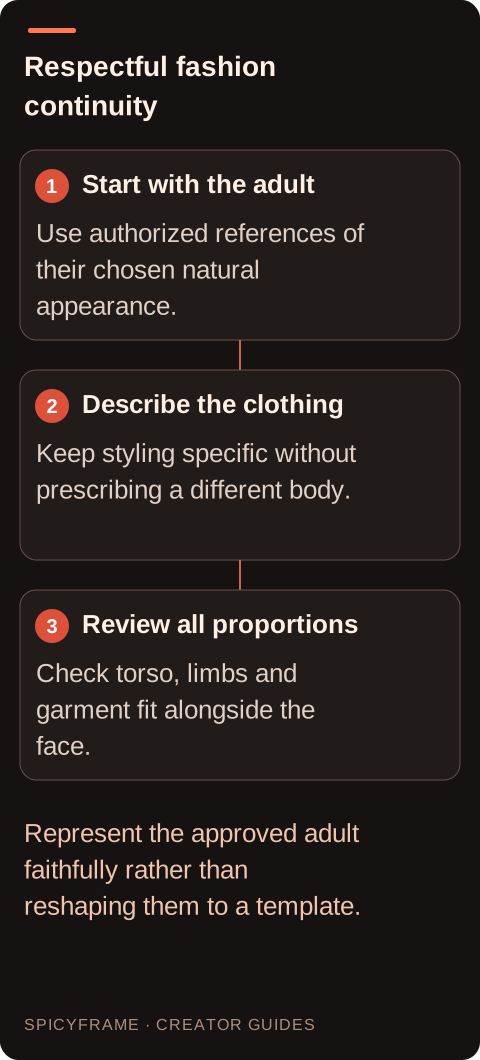
Start with the adult: Use authorized references of their chosen natural appearance.. Describe the clothing: Keep styling specific without prescribing a different body.. Review all proportions: Check torso, limbs and garment fit alongside the face.. Represent the approved adult faithfully rather than reshaping them to a template.
Choose motion that reveals design without forcing a pose
A small turn can show a garment’s side seam, while a relaxed step can reveal a hem. An upright seated pose may suit a portrait if chair contact and fabric folds are clear. Do not make adults perform exaggerated poses simply to make their bodies appear smaller or more conventionally shaped. Ask what movement serves the clothing and the person’s chosen presentation. The storyboard guide helps write a clear opening, action and settling moment. These are planning cues, not precise motion controls. Keep the first action restrained so you can inspect whether shoulders, torso and limbs remain proportional throughout the scene.
A prompt centered on continuity and personal style
A proposed brief might say: “Use @Image1 for the consenting adult’s identity and natural proportions, and @Image2 for the approved plum jacket and wide leg trousers. Relaxed upright fashion pose against a simple warm gray backdrop, one small shoulder turn, soft side light and a steady camera, quiet studio ambience.” This defines an adult fashion study without requesting body reshaping. @Image1 and @Image2 indicate reference roles rather than guaranteed controls. If the output narrows the waist or changes limb length, reject that candidate for this brief. A more specific review note is useful, but the system may still vary and no phrase can enforce exact anatomy.
A hypothetical inclusive lookbook review
Imagine a clothing label has permission to animate portraits of several adult models with different body types. For one model, the approved source shows a relaxed stance in a structured jacket. The five second test uses a small turn and neutral studio light. The review criteria include the adult’s recognizable face, stable shoulder width, consistent jacket length and a natural connection between feet and floor. The reviewer compares the source and several clip moments without ranking the body against another model. If the output changes proportions, they revise the source or movement and do not present the altered version as faithful. This is a planning example, not a claim of verified model performance or product fit.
Check proportion drift alongside facial identity
A face can remain similar while the body changes. Watch shoulder width, torso length, arm thickness, leg proportions and the relationship between garment seams and the body. Camera perspective can change apparent size naturally, so distinguish a coherent viewpoint change from local warping. The identity guide provides facial checks, but it is only part of this review. Follow clothing folds and chair contact if the adult is seated. Do not automatically call a natural asymmetry an artifact. Compare against the approved source and ask whether the movement preserves the person, rather than whether every frame conforms to a generic fashion ideal.
Approve representation, claims and final context together
SpicyFrame outputs vertical 9:16 MP4 with ambient audio in 5, 10 or 30 seconds, at Medium 480p, High 720p and Ultra 1080p. More pixels do not prevent body drift. Review the final crop so it does not accidentally remove the garment or gesture the adult approved. External editing can trim a stable moment or adjust sound, but it should not quietly reshape the subject. If the clip is used commercially, do not claim that generated drape proves real fit, sizing or product performance. Keep captions respectful and accurate about AI treatment. The adult’s review and agreed use matter alongside technical quality, because the presentation represents a person rather than a collection of proportions.
AI glamour body diversity: planning decisions
Choice
Use when
Acceptance check
Clear natural stance
The adult’s proportions should remain recognizable
Source and output agree without forced standardization
Garment focused wording
The fashion design is the subject of the brief
No unapproved slimming or body alteration is requested
Small shoulder turn
A seam or silhouette needs limited motion
Torso and limb proportions remain coherent
Seated portrait
The adult prefers a calm supported pose
Chair contact and clothing folds stay natural
Representation review
The clip will present a real adult publicly
Person, proportions, caption and intended use are approved together
AI image-to-video questions answered
Should I mention body type in the prompt?
Only when it helps describe the approved adult reference or original fictional design, and use neutral language. Detailed continuity cues may be more useful than broad labels. Do not turn the brief into a request to idealize or reshape a real person.
Can AI preserve a real adult’s proportions exactly?
Exact preservation is not guaranteed. Use clear sources, restrained movement and a review that covers the body as well as the face. Reject outputs that materially change the approved appearance instead of assuming a respectful prompt was sufficient.
Is a seated pose appropriate?
Yes, when the adult chooses it and the source supports the outfit and chair contact. Inspect fabric folds, hands, torso and feet. A seated portrait should serve the fashion concept rather than function as a way to hide or diminish a body type.
What if the generated waist becomes narrower?
Treat that as a mismatch when the brief requires faithful representation. Compare the source and output, reduce movement or choose a clearer reference, and do not publish the altered result as though it preserved the adult’s natural proportions.
Can the video demonstrate inclusive sizing?
A creative clip can show a diverse editorial cast, but generated fit is not proof of actual sizing or garment performance. Support factual product claims with appropriate real evidence and distinguish that evidence from AI fashion imagery.
Should all models use identical poses?
Not necessarily. Comparable framing can support a coherent lookbook, while poses can respect each adult’s comfort and style. Keep the garment purpose consistent without forcing every person into a standardized body presentation or treating differences as defects.